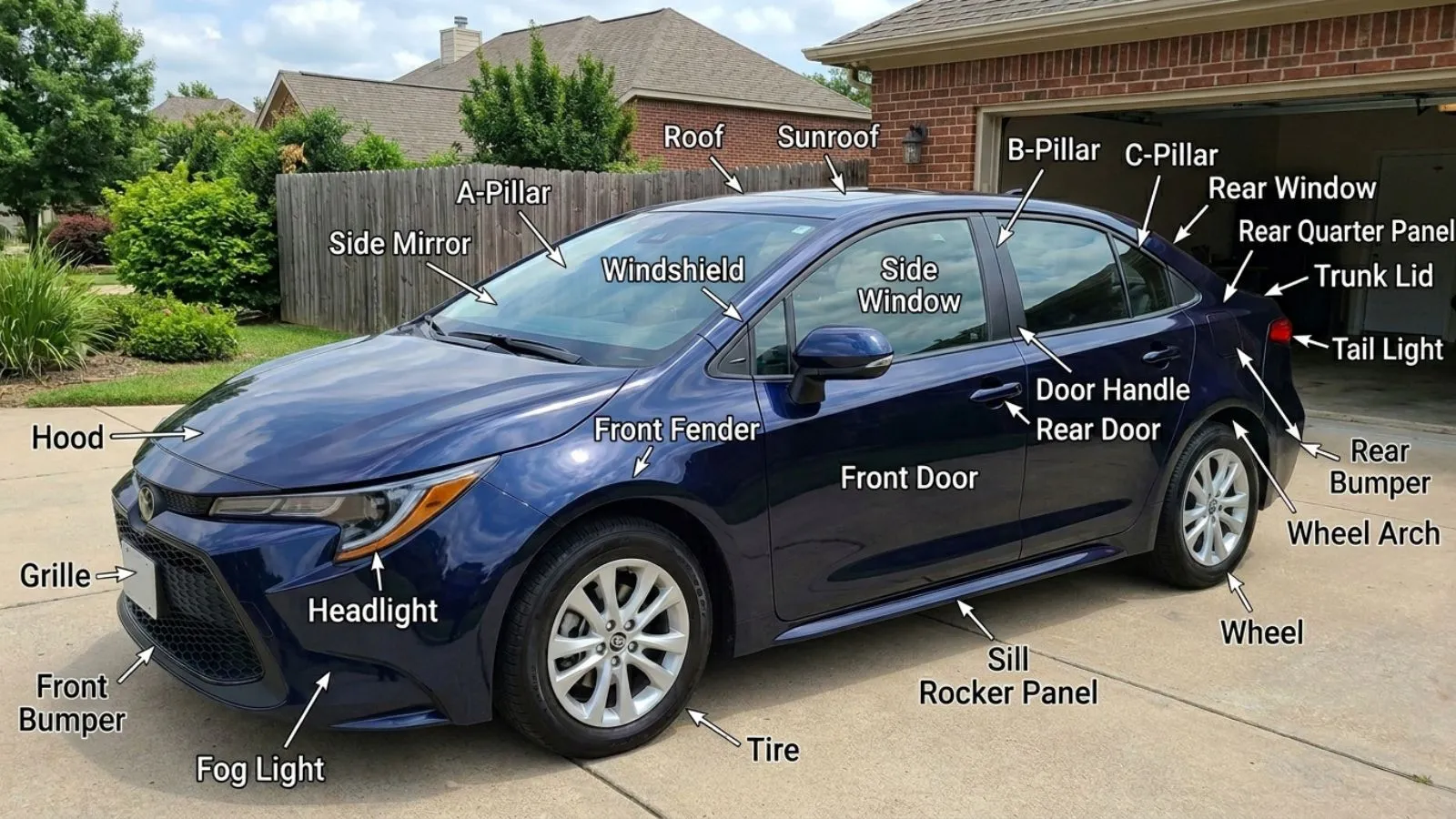
I want to share something that happened to me recently about Car Body Parts Names. We was chatting with a friend when I suddenly saw this term come up, and honestly, I had no idea what it meant at first.
That kept thinking, “Am I missing something here?” It felt a bit confusing, and I didn’t want to respond incorrectly.
So, I decided to look deeper into Car Body Parts Names to understand its meaning and context. After learning about it, I realized how useful it is to know these terms, especially when talking about cars or reading automotive content online.
Once I understood it properly, I felt much more confident. Now, whenever I see Car Body Parts Names in conversations or on social media, I know exactly what it means and how to respond without any confusion.
🏎️ Front Body Parts Names The Face of Your Car
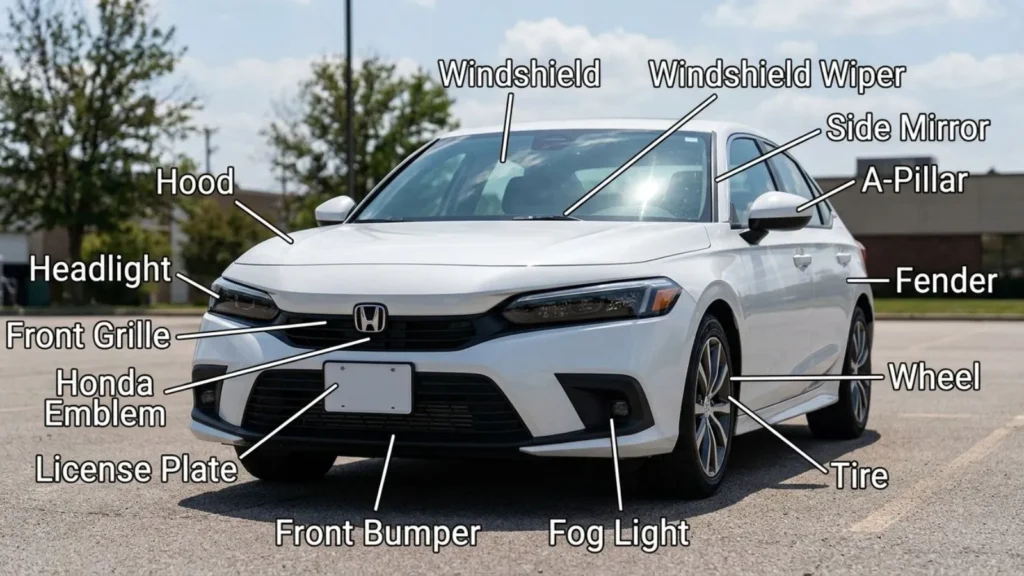
The front of your car is the first thing people see. It’s your car’s “face.” These parts protect the engine, improve airflow and give your vehicle its unique look. Knowing these names helps you describe damage accurately after a fender bender.
1. Front Bumper Meaning: The large protective bar at the very front of the car. It absorbs impact during low-speed collisions to protect the engine and frame.
2. Hood (Bonnet) Meaning: The hinged metal cover over the engine compartment. It allows access for maintenance and protects the engine from weather.
3. Grille Meaning: The vented panel at the front usually between or below the headlights. It allows air to flow into the engine for cooling.
4. Headlights Meaning: The main front lights that illuminate the road at night. They come in halogen LED or HID varieties.
5. Fog Lights Meaning: Low-mounted lights below the headlights. They cut through fog, rain and snow to improve visibility in bad weather.
6. Front Fender Meaning: The curved panel above and around the front tires. It prevents mud and debris from being thrown by the wheels.
7. Windshield (Windscreen) Meaning: The large front glass panel the driver looks through. It protects passengers from wind, rain , insects and debris.
8. Hood Ornament Meaning: A decorative emblem or figure mounted on top of the hood. It often represents the car brand (like the Mercedes star).
9. Front Valance Meaning: The lower trim panel beneath the front bumper. It improves aerodynamics and gives the front end a finished look.
10. Tow Hook Cover Meaning: A small removable panel on the bumper hiding the tow hook attachment point. Used for towing or recovery situations.
🚪 Car Door Parts Names Entry & Exit Experts
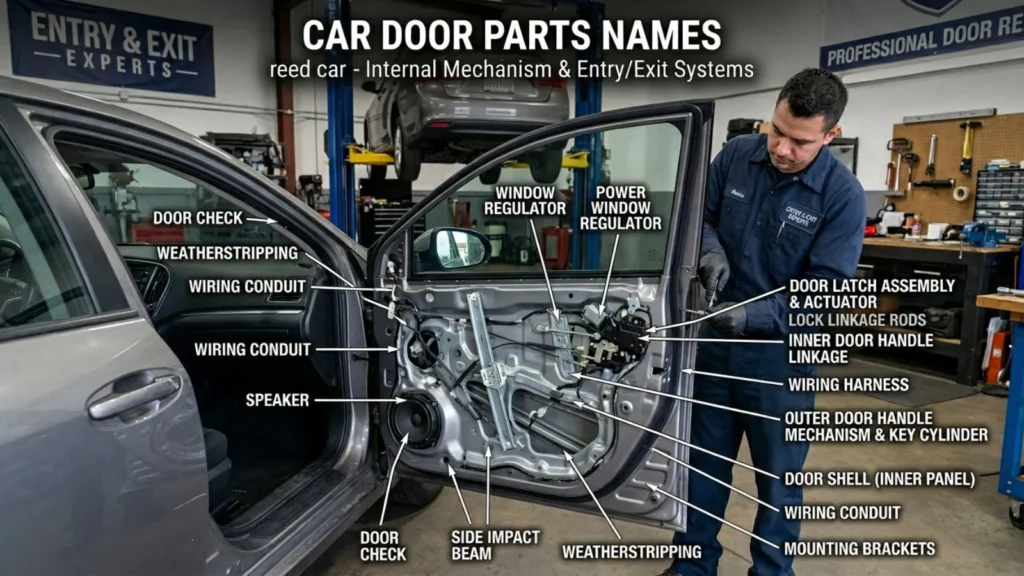
Car doors are more complex than they look! They include multiple parts that work together for safety, comfort and style. Understanding door parts helps you explain damage, order the right replacement panels and maintain your car properly.
1. Door Panel Meaning: The entire outer metal or plastic surface of the door. It’s the large flat section you see from outside the car.
2. Door Handle (Exterior) Meaning: The grip or lever on the outside of the door used to open it. Can be body-colored or chrome-finished.
3. Door Handle (Interior) Meaning: The pull handle inside the car used to open the door from within. Usually mounted on the inner door trim.
4. Window Glass Meaning: The glass panel in the door that can be raised or lowered. Also called the door window or side glass.
5. Window Regulator Meaning: The mechanical or electric mechanism that moves the window up and down. Electric regulators are controlled by a button.
6. Door Hinge Meaning: The metal joint that attaches the door to the car body. It allows the door to swing open and closed smoothly.
7. Door Seal (Weatherstrip) Meaning: The rubber strip around the door frame. It keeps out rain, wind noise and dust when the door is closed.
8. Door Sill Meaning: The horizontal bar at the bottom of the door opening. You step over it when getting in and out of the car.
9. Door Lock Meaning: The locking mechanism that secures the door shut. Can be operated manually electrically or via key fob.
10. Side Impact Beam Meaning: A reinforced bar hidden inside the door. It protects passengers during side collisions by absorbing crash energy.
🔦 Exterior Lighting Parts Names Let There Be Light!
Lights are one of the most important safety features on any car. They help you see and be seen, signal your intentions and make your car visible in poor conditions. Every driver should know these lighting part names.
1. Tail Lights Meaning: The red lights at the rear of the car. They glow whenever headlights are on and get brighter when you brake.
2. Brake Lights Meaning: Bright red lights at the rear that activate when you press the brake pedal. They warn drivers behind you that you’re slowing down.
3. Turn Signals (Indicators) Meaning: Amber/orange flashing lights at the front and rear corners. They signal which direction you’re turning or changing lanes.
4. Reverse Lights Meaning: White lights at the rear that turn on when the car is in reverse. They alert others that the car is moving backward.
5. Daytime Running Lights (DRL) Meaning: Low-intensity lights that stay on whenever the car is running in daylight. They improve vehicle visibility to other road users.
6. Hazard Lights Meaning: All four turn signals flashing simultaneously. Used to warn other drivers of an emergency or breakdown.
7. Side Marker Lights Meaning: Small amber or red lights on the sides of the car near the corners. They help other drivers judge the car’s position on the road.
8. License Plate Light Meaning: A small white light mounted above or beside the rear license plate. It illuminates the plate number for visibility at night.
9. Third Brake Light (CHMSL) Meaning: The center high-mounted stop lamp usually at the top of the rear windshield. It provides an extra brake warning for drivers behind.
10. Cornering Lights Meaning: Supplemental lights that turn on when you steer in a direction. They illuminate the area you’re turning into for better visibility.
🏠 Roof & Top Body Parts Names What’s on Top
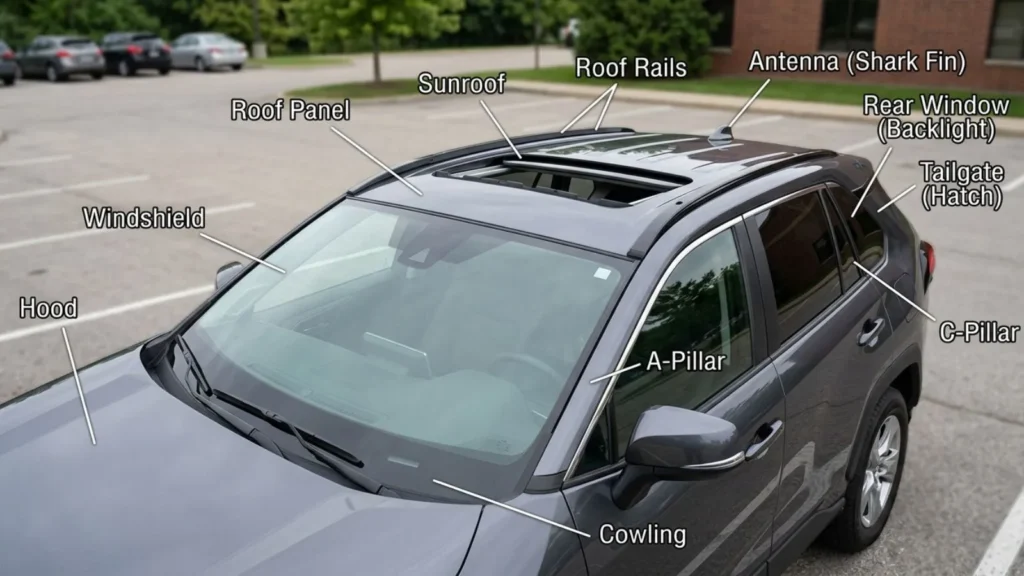
The roof of your car isn’t just one flat panel it’s made up of several different parts each with a specific function. These parts protect you from the elements and contribute to the structural strength of the vehicle.
1. Roof Panel Meaning: The main flat or slightly curved metal section on top of the car. It forms the ceiling of the passenger cabin.
2. Sunroof Meaning: A glass panel in the roof that can tilt or slide open. It lets in light and fresh air for a more open driving feel.
3. Panoramic Roof Meaning: A large glass roof panel that spans most of the roofline. It gives a wide open feel and floods the cabin with natural light.
4. Roof Rails Meaning: Raised bars running along the length of the roof. They serve as anchor points for roof racks, cargo boxes and bike carriers.
5. A-Pillar Meaning: The angled support column on either side of the windshield. It connects the roof to the front body and frames the windshield.
6. B-Pillar Meaning: The vertical support between the front and rear doors. It provides structural rigidity and often contains door latch mechanisms.
7. C-Pillar Meaning: The rear support column connecting the roof to the rear body. In sedans it frames the rear side window.
8. Drip Rail Meaning: A narrow channel running along the edge of the roof. It directs rainwater away from the doors and windows.
9. Roof Antenna Meaning: The thin rod or shark-fin shaped device on the roof. It receives AM/FM radio signals and sometimes GPS or cellular signals.
10. Convertible Soft Top Meaning: The folding fabric roof on convertible cars. It can be lowered to open the cabin to the sky.
🔧 Engine Compartment Body Parts Names Under the Hood
Pop the hood and you’ll find a world of mechanical parts surrounded by body panels and covers. These parts protect your engine and help the car run cool and efficiently. Knowing them helps you understand basic maintenance.
1. Engine Cover Meaning: A plastic cover placed over the engine. It reduces noise, improves aesthetics and protects components from dust and debris.
2. Radiator Support Meaning: The metal frame that holds the radiator in place at the front of the engine bay. It also supports the headlights and grille.
3. Firewall Meaning: The metal barrier between the engine compartment and the passenger cabin. It prevents heat fumes and fire from reaching passengers.
4. Strut Tower Meaning: The raised dome-shaped section in the engine bay where the suspension strut mounts. It transfers suspension forces to the body.
5. Battery Tray Meaning: The plastic or metal platform that holds the car battery in place. It prevents the battery from vibrating loose while driving.
6. Air Filter Housing Meaning: The plastic box that holds the engine air filter. It directs clean filtered air into the engine intake.
7. Coolant Reservoir Meaning: A plastic tank that stores extra coolant (antifreeze). It feeds into the radiator as needed to maintain engine temperature.
8. Washer Fluid Reservoir Meaning: A translucent plastic tank that holds windshield washer fluid. It feeds the wiper spray nozzles on the hood.
9. Fuse Box Cover Meaning: The plastic lid covering the engine bay fuse box. It protects the electrical fuses and relays from moisture and contamination.
10. Hood Insulator Pad Meaning: The foam or felt lining on the underside of the hood. It dampens engine noise and provides a small amount of heat insulation.
🚗 Rear Body Parts Names The Back End Breakdown
The rear of your car handles exhaust cargo and visibility. Rear body parts are especially important after a collision since rear-end accidents are incredibly common. Here are the parts you need to know.
1. Rear Bumper Meaning: The protective bar at the very back of the car. It absorbs impact in low-speed rear collisions and protects the trunk area.
2. Trunk Lid (Boot) Meaning: The hinged panel that covers the cargo area at the rear. It can be opened to access the storage space.
3. Rear Windshield (Rear Screen) Meaning: The glass panel at the back of the car. It provides rear visibility and often has a built-in defroster.
4. Rear Fender (Quarter Panel) Meaning: The body panel above and around the rear tires. It’s one of the most expensive panels to repair or replace.
5. Trunk Spoiler Meaning: A fin-like aerodynamic device mounted on the trunk lid. It reduces lift at high speeds and is often a style statement.
6. Exhaust Tip Meaning: The visible end of the exhaust pipe at the rear. It can be chrome black or dual-tipped depending on the car’s style.
7. Rear Valance Meaning: The lower trim panel beneath the rear bumper. It improves aerodynamics and gives the rear end a clean finished appearance.
8. License Plate Recess Meaning: The recessed area in the rear bumper or trunk lid that holds the license plate. It frames the plate neatly into the body.
9. Rear Diffuser Meaning: An aerodynamic panel under the rear bumper that manages airflow under the car. Common on sports cars to increase downforce.
10. Trunk Release Button Meaning: A button or lever that electronically or mechanically opens the trunk lid. Can be located inside the car on the key fob or on the bumper.
🛞 Wheel & Tire Area Body Parts Names Rolling Right
The area around your wheels includes several important body and trim parts. These parts keep your cabin clean, protect the mechanical components and add to the visual appeal of your vehicle.
1. Wheel Arch (Wheel Well) Meaning: The curved opening in the body panel where the tire sits. It gives the tire room to turn and move with the suspension.
2. Fender Liner (Wheel Arch Liner) Meaning: A plastic panel inside the wheel arch. It protects the engine bay and body from mud rocks and water thrown by the tires.
3. Mud Flap (Splash Guard) Meaning: A rubber or plastic flap behind each tire. It prevents mud and debris from being sprayed onto other vehicles or your own bodywork.
4. Wheel Cover (Hubcap) Meaning: A decorative cover over the center of the wheel. It hides the lug nuts and wheel hardware on steel wheels.
5. Alloy Wheel (Rim) Meaning: A lightweight wheel made from aluminum alloy. It improves handling, looks stylish and is lighter than steel wheels.
6. Center Cap Meaning: The small circular cover in the center of an alloy wheel. It protects the wheel hub and displays the car brand logo.
7. Lug Nuts Meaning: The threaded fasteners that secure the wheel to the hub. They must be tightened to the correct torque for safe driving.
8. Valve Stem Meaning: The small rubber or metal nozzle on the wheel rim used to inflate the tire. A valve cap covers it to keep out dirt.
9. Brake Caliper Meaning: The clamp-like device that squeezes the brake pads against the rotor to slow the car. Often visible through alloy wheel spokes.
10. Rotor (Brake Disc) Meaning: The large metal disc that rotates with the wheel. The brake caliper grips it to create the friction needed to stop the car.
Glass & Window Parts Names Clear Vision Ahead
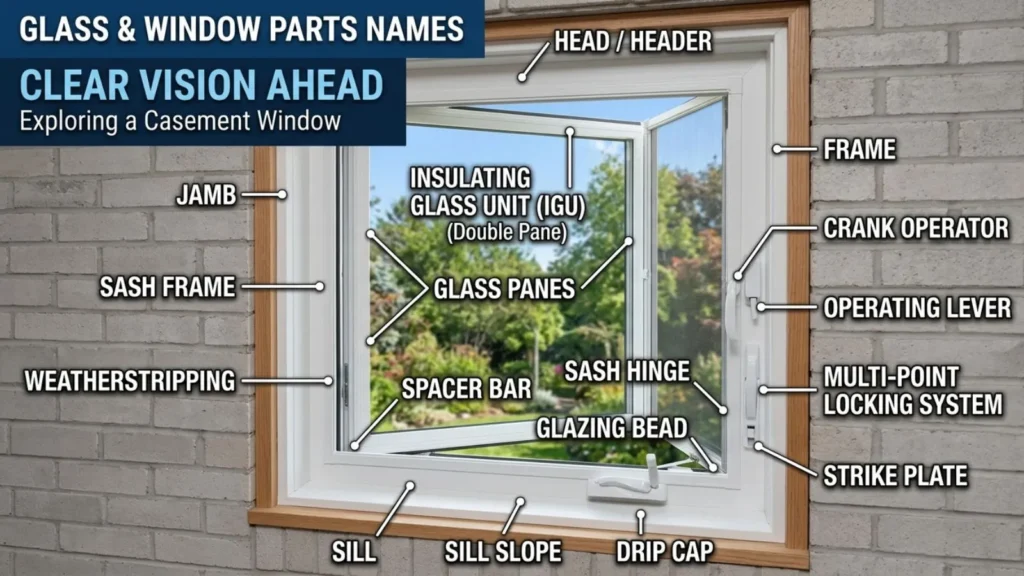
Glass plays a huge role in driver visibility and passenger safety. Modern car glass is engineered to be incredibly strong yet lightweight. Knowing these glass parts helps you understand what needs replacing after damage.
1. Windshield Meaning: The front laminated safety glass. If cracked the layers hold together rather than shattering into sharp pieces.
2. Rear Window Meaning: The back glass pane. Most have a printed heating element to defrost and demist the glass automatically.
3. Side Windows (Door Glass) Meaning: The glass panels in each door. Front side windows are usually fully retractable; rear ones may be fixed or partially opening.
4. Quarter Glass Meaning: Small fixed glass panels next to the rear doors or behind the C-pillar. They extend the greenhouse area of the car.
5. Sunroof Glass Meaning: The glass panel set into the roof. It can be tinted to reduce heat and UV rays entering the cabin.
6. Vent Glass Meaning: A small triangular glass piece at the front corner of the door window. Older cars used these to vent air into the cabin.
7. Rear Side Glass Meaning: The glass panels in the rear doors of a four-door car. They can be rolled down or may be fixed on some models.
8. Window Tint Film Meaning: A thin adhesive film applied to the inside of glass. It reduces glare heat and UV exposure inside the vehicle.
9. Wiper Blades Meaning: The rubber strips on the wiper arms that sweep water off the windshield. They should be replaced every 6–12 months.
10. Defrost Grid Meaning: The fine wire grid embedded in the rear window glass. When powered it heats up and clears frost ice and fog quickly.
🏗️ Structural Body Parts Names The Skeleton of Your Car
Beneath all the panels and trim every car has a strong structural skeleton. These parts determine how safe your car is in a crash. They’re often invisible but absolutely critical to understand.
1. Unibody Frame Meaning: The single integrated structure that combines the body and chassis into one unit. Most modern cars use this design for rigidity and weight savings.
2. Chassis Meaning: The base framework of the vehicle that supports the engine drivetrain and body. On trucks it’s a separate ladder-like frame.
3. Crumple Zone Meaning: Engineered sections at the front and rear that are designed to deform in a crash. They absorb energy to protect the passenger cabin.
4. Rocker Panel Meaning: The structural metal panel along the bottom of the car between the front and rear wheel arches. It’s a key part of the car’s side structure.
5. Floor Pan Meaning: The flat metal floor of the cabin. It forms the bottom of the passenger compartment and often houses the fuel tank underneath.
6. Firewall Meaning: The metal divider between the engine bay and the passenger cabin. It’s a critical structural and safety component.
7. Roof Bow Meaning: The curved structural ribs that run across the inside of the roof. They support the roof panel and prevent it from flexing.
8. Inner Fender (Engine Bay Liner) Meaning: The metal inner panel of the fender visible inside the engine bay. It provides structure and separates the engine bay from the wheel arch.
9. Subframe Meaning: A secondary frame bolted to the main body that supports the engine transmission or suspension. It can be removed for major repairs.
10. Roll Cage (in sports cars) Meaning: A reinforced metal frame built inside the cabin. It protects occupants if the car rolls over standard in race and performance cars.
✨ Trim & Accessories Body Parts Names The Finishing Touches
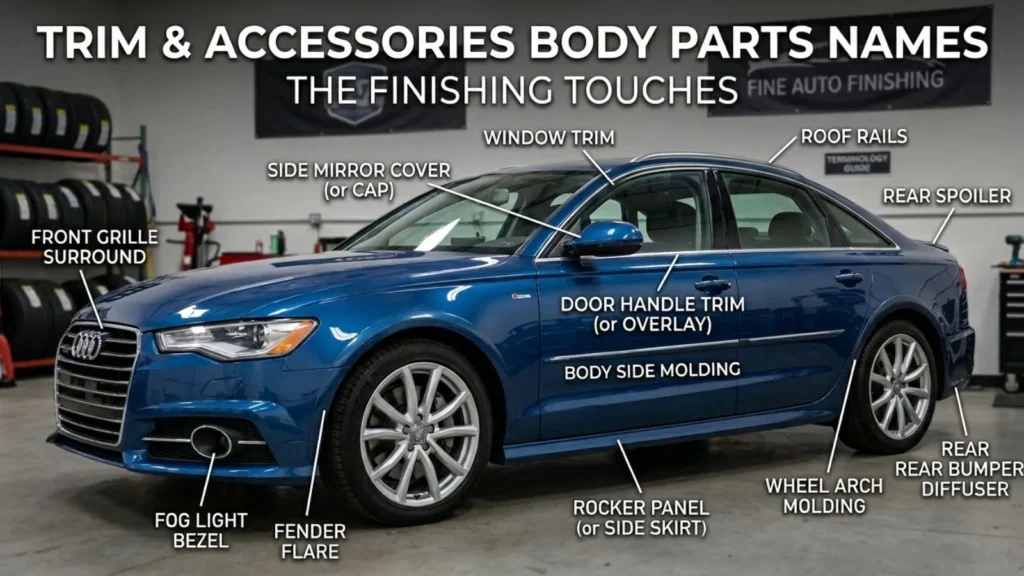
These are the decorative and functional add-ons that make your car look polished and personal. Trim parts aren’t just cosmetic; many also protect the underlying bodywork from everyday damage.
1. Body Side Molding Meaning: Plastic or rubber strips running along the sides of the car at door height. They protect doors from minor dings in parking lots.
2. Chrome Trim Strips Meaning: Shiny metallic decorative strips applied to windows grilles or door edges. They add a premium finished look to the exterior.
3. Roof Spoiler Meaning: An aerodynamic fin mounted at the top rear of the car. It reduces drag and adds a sporty visual element to the design.
4. Door Cladding Meaning: Protective plastic panels on the lower section of doors. Common on SUVs and crossovers for a rugged off-road aesthetic.
5. Side Skirts Meaning: Low-profile panels attached between the front and rear wheel arches along the bottom of the doors. They reduce air turbulence under the car.
6. Rear Spoiler Wing Meaning: A raised aerodynamic wing on the trunk lid. On performance cars it generates downforce; on others it’s mostly a style feature.
7. Front Lip Spoiler Meaning: A low-profile aerodynamic add-on at the bottom of the front bumper. It reduces airflow under the car to improve stability at speed.
8. Decals and Stripes Meaning: Graphic vinyl designs applied to the body panels. They can be racing stripes brand graphics or custom artistic designs.
9. Tow Hitch Cover Meaning: A plug or decorative cover for the trailer hitch receiver when not in use. It keeps the receiver clean and prevents injury from the exposed opening.
10. Antenna Mast Meaning: The replaceable tip section of a traditional rod antenna. It can break in car washes and is easily unscrewed and replaced.
❓ Frequently Asked Questions (FAQs)
Q1. What are the main exterior body parts of a car?
The main exterior body parts include the hood front and rear bumpers, fenders , doors , roof panel, trunk lid, windshield headlights, tail lights and quarter panels. These form the visible outer shell of the vehicle.
Q2. What is the difference between a fender and a quarter panel?
A fender is the panel above and around the front wheels while a quarter panel covers the area above and around the rear wheels. The quarter panel is generally more expensive to replace because it’s a larger structurally integrated panel.
Q3. What is the B-pillar on a car?
The B-pillar is the vertical support column between the front and rear doors. It provides structural rigidity to the car’s body and is a critical safety component in side-impact crashes.
Q4. What are crumple zones?
Crumple zones are engineered sections of the car’s front and rear structure designed to deform and collapse in a controlled way during a collision. They absorb crash energy and redirect it away from the passenger cabin.
Q5. What is a rocker panel?
The rocker panel is the structural metal panel running along the bottom of the car between the front and rear wheel arches. It sits below the doors and is part of the car’s side structural frame.
Q6. What’s the difference between a sunroof and a panoramic roof?
A sunroof is a smaller single glass or metal panel in the roof that opens or tilts. A panoramic roof is a much larger glass panel or multiple panels that spans a significant portion of the roofline giving a more open-sky feel.
Q7. What are side skirts on a car?
Side skirts are low-profile panels attached along the bottom of the car between the front and rear wheel arches. They reduce air turbulence underneath the vehicle and give a sportier more aerodynamic appearance.
Q8. Why is the windshield glass different from other car windows?
The windshield is made from laminated safety glass with two layers of glass bonded with a plastic interlayer. If it breaks the glass stays in one piece rather than shattering. Side and rear windows are made from tempered glass that shatters into small less dangerous pieces.
✅ Conclusion:
And there you have it, a complete easy-to-read guide to car body parts names! We’ve covered everything from the front bumper and headlights to structural components roof parts wheel arch liners and decorative trim.
If you’re talking to a mechanic filing an insurance claim buying a used car or just want to feel more confident about your vehicle knowing these terms makes a real difference.
The key takeaway? Cars are made up of dozens of carefully designed body parts and each one has a specific name, function and purpose.
The more you know the better you can maintain your car, communicate repairs clearly and protect your investment.
Go back through the sections and pick out the parts you weren’t familiar with before then go take a look at your own car. You’ll be surprised how much more you notice once you know what everything is called!

Harper Bailey, a professional writer and expert at Nameoura.com. I create clear, engaging, and reader-friendly articles on business