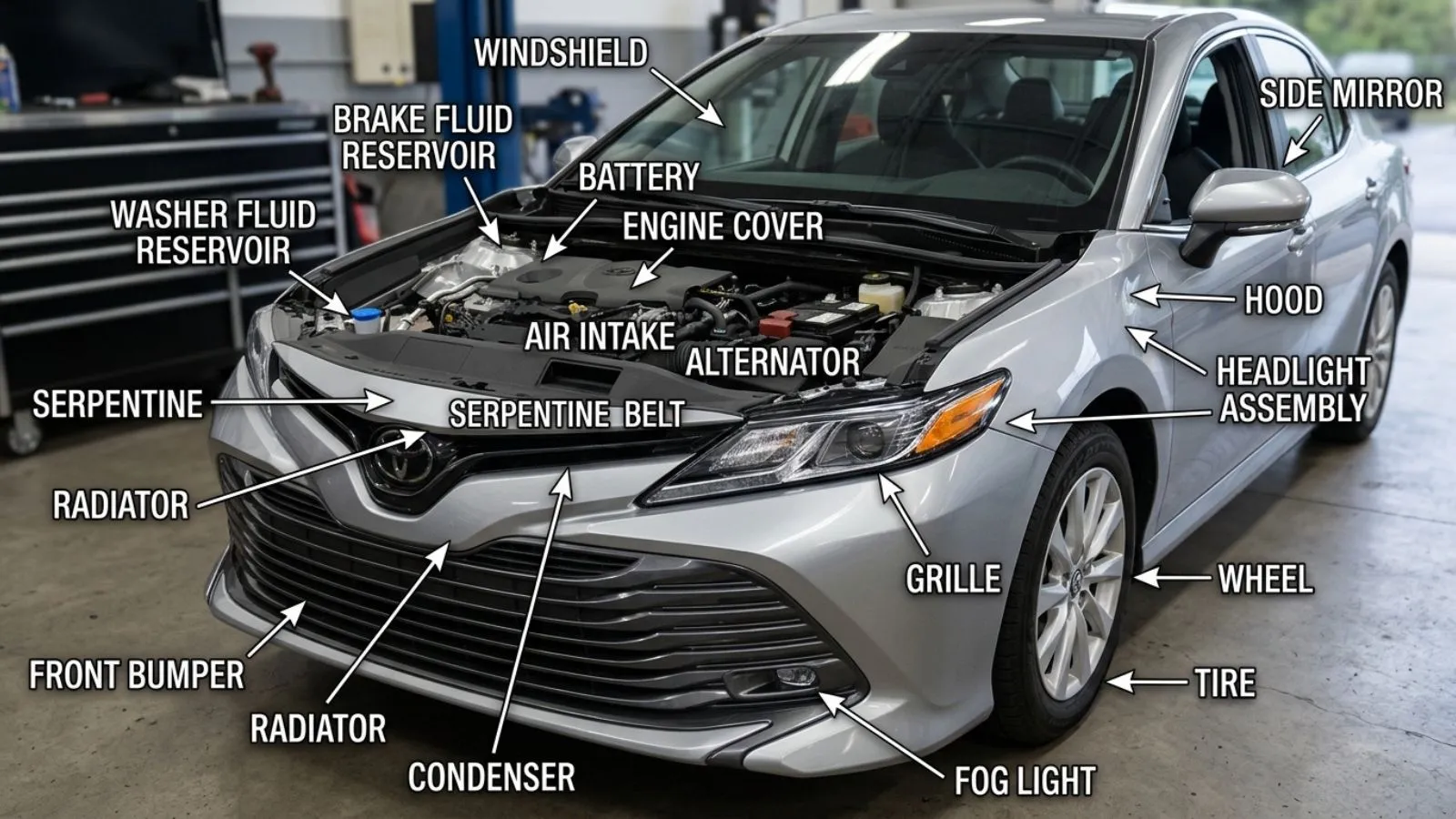
It want to share something that happened to me recently about Front End Parts Names. We was having a casual conversation with a friend when I suddenly came across this term, and honestly, I had no idea what it meant at first.
That kept thinking, “Am I missing something here?” It felt a bit confusing, and I didn’t want to respond incorrectly or look unaware.
So, I decided to look deeper into Front End Parts Names to understand their meaning and context.
After learning about it, I realized how important it is to be familiar with such terms especially when they come up in discussions, chats, or social media conversations.
Once I understood the concept, I was able to respond confidently without any confusion. Now, I feel much more prepared whenever I see Front End Parts Names mentioned again, and it’s helped me avoid awkward situations in the future. 🔧
🚘 Classic Exterior Body Parts Names
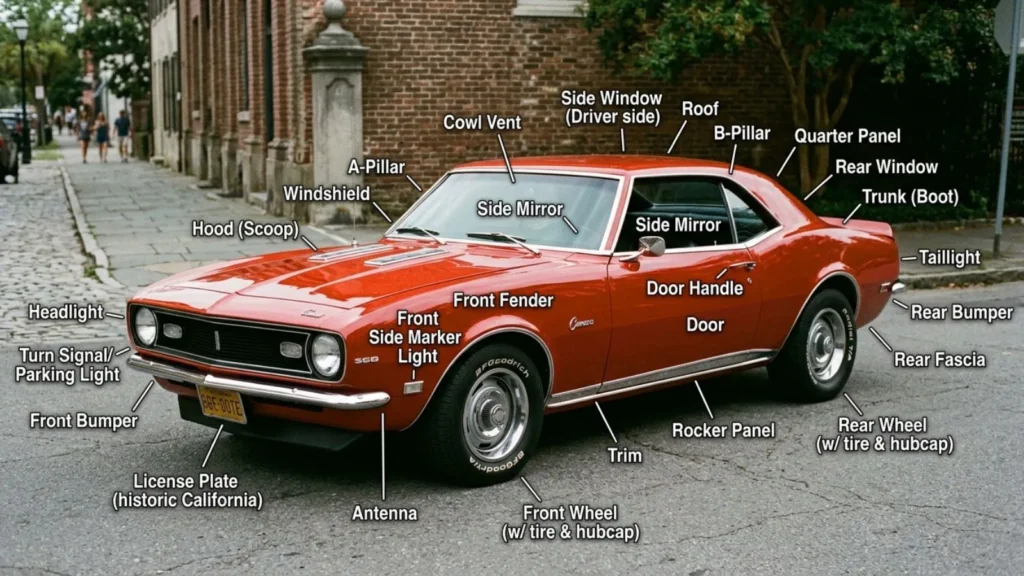
The exterior body of a car’s front end is what most people see first. These parts protect the vehicle, give it its shape and make a strong first impression on the road.
1. Hood (Bonnet) Meaning: The large metal panel covering the engine. It opens upward to give access to the engine bay for maintenance and repairs.
2. Front Bumper Meaning: The protective bar at the very front of the car designed to absorb impact during low-speed collisions and protect the body.
3. Front Fender Meaning: The panel that sits above and around the front wheels. It shields the body from mud rocks and road debris thrown up by the tires.
4. Grille Meaning: The mesh or slotted panel between the headlights. It allows air to flow into the engine bay for cooling while keeping debris out.
5. Front Apron Meaning: The lower section beneath the bumper sometimes called the air dam. It controls airflow under the vehicle and improves aerodynamics.
6. Hood Latch Meaning: The locking mechanism that keeps the hood closed while driving. It releases when you pull the interior hood release lever.
7. Cowl Panel Meaning: The area between the hood and the windshield. It channels water away from the engine and holds the windshield wiper assembly.
8. Front Valance Meaning: A decorative and functional panel below the front bumper. It improves the car’s appearance and helps direct air away from the undercarriage.
9. Splash Guard (Mud Flap) Meaning: Rubber or plastic panels behind the front wheels that prevent mud and water from spraying onto the body or other vehicles.
10. Front Side Marker Meaning: A small amber light on the front sides of the vehicle used to make the car more visible to other drivers at intersections and in low light.
💡 Front Lighting Parts Names
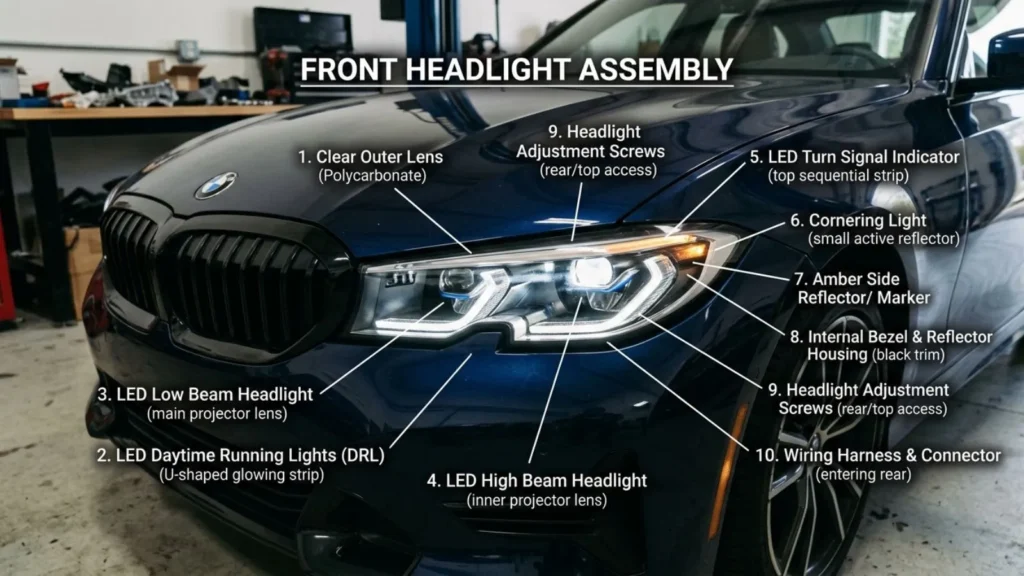
Lights are among the most important safety features on any vehicle. The front lighting system includes more components than most people realize.
1. Headlight (Headlamp) Meaning: The primary light source at the front of the car used to illuminate the road ahead at night or in poor visibility conditions.
2. High Beam (Main Beam) Meaning: A brighter longer-range setting of the headlight that provides maximum visibility on dark roads when no oncoming traffic is present.
3. Low Beam (Dipped Beam) Meaning: The standard headlight setting used in normal driving conditions. It is angled downward to avoid blinding oncoming drivers.
4. Fog Light (Front Fog Lamp) Meaning: A low-mounted light designed to cut through fog rain and snow by projecting a wide flat beam close to the road surface.
5. Daytime Running Light (DRL) Meaning: Lights that switch on automatically when the engine starts. They make the vehicle visible to others during daytime driving.
6. Turn Signal (Indicator) Meaning: The amber flashing light on the front corners of the car used to signal a left or right turn to other drivers and pedestrians.
7. Parking Light (Sidelights) Meaning: Small lights that can be turned on independently of the headlights. They make a parked or stationary car visible in low-light conditions.
8. Projector Headlight Meaning: A type of headlight with a lens that focuses light into a precise controlled beam offering better clarity and direction than standard reflector headlights.
9. LED Strip (Light Bar) Meaning: A decorative and functional LED accent line built into modern headlight assemblies often used as DRLs or styling elements.
10. Headlight Washer Nozzle Meaning: A small water jet hidden in the bumper that sprays and cleans the headlight lens on vehicles equipped with this feature.
🔩 Front Suspension Parts Names
The front suspension system keeps your ride smooth and your car in control. These are the parts that absorb bumps and keep your wheels firmly on the ground.
1. Control Arm (A-Arm) Meaning: A hinged suspension link that connects the wheel hub to the vehicle’s frame allowing the wheel to move up and down independently.
2. Ball Joint Meaning: A spherical bearing connecting the control arm to the steering knuckle. It acts like a hip joint allowing the wheel to pivot and move in multiple directions.
3. Strut (MacPherson Strut) Meaning: A combined shock absorber and spring unit used in most modern front suspensions. It supports the vehicle’s weight and dampens road impacts.
4. Coil Spring Meaning: A heavy-duty steel spring that sits around or beside the strut. It supports the vehicle’s weight and helps absorb road shock.
5. Shock Absorber Meaning: A hydraulic device that controls the bouncing motion of the spring ensuring the tire stays in contact with the road after hitting a bump.
6. Steering Knuckle (Upright) Meaning: The part that holds the wheel hub and connects the steering and suspension systems. It allows the wheel to turn left and right.
7. Tie Rod End Meaning: The outer link between the steering rack and the steering knuckle. When you turn the steering wheel the tie rod pushes or pulls the wheel in that direction.
8. Sway Bar (Anti-Roll Bar) Meaning: A metal bar connecting the left and right suspension. It reduces body roll when the car corners, keeping the vehicle stable.
9. Wheel Hub Assembly Meaning: The central component that the wheel bolts onto. It houses the wheel bearing and connects the wheel to the axle.
10. Strut Tower Meaning: The reinforced section of the car’s body where the top of the strut is mounted. It transfers suspension loads directly into the vehicle’s frame.
🛞 Front Wheel & Brake Parts Names
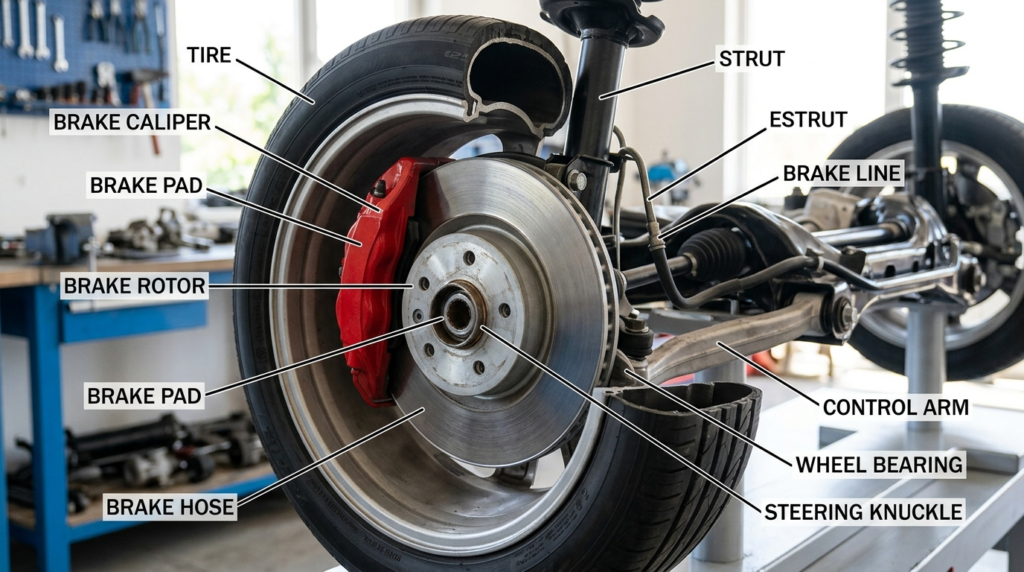
Your front wheels and brakes do the hardest work on the car. Knowing their names helps you understand what’s happening when you feel a vibration or hear a squeak.
1. Brake Rotor (Disc) Meaning: The circular metal disc that the brake caliper grips to slow or stop the vehicle. It spins with the wheel and generates friction when brakes are applied.
2. Brake Caliper Meaning: The clamp-like device that squeezes the brake pads against the rotor. It houses the hydraulic pistons that create braking force.
3. Brake Pad Meaning: A friction material pressed against the rotor by the caliper. Brake pads wear down over time and need regular replacement.
4. Wheel Bearing Meaning: A set of steel balls or rollers inside a ring that allows the wheel to spin smoothly with minimal friction. A worn bearing causes a humming noise.
5. Lug Nut Meaning: The threaded fastener that secures the wheel to the hub. Most vehicles use four or five lug nuts per wheel.
6. Brake Hose (Flexible Brake Line) Meaning: A rubber hose that carries brake fluid from the rigid metal lines on the body to the moving brake caliper on the wheel.
7. ABS Sensor (Wheel Speed Sensor) Meaning: A sensor mounted near the wheel that monitors rotation speed. It sends data to the ABS system to prevent wheels from locking during hard braking.
8. Dust Shield (Brake Backing Plate) Meaning: A thin metal plate behind the brake rotor that shields the braking components from dirt debris and moisture.
9. Center Cap Meaning: The decorative plastic or metal cover in the center of the wheel that hides the lug nuts and wheel hub from view.
10. Tire Valve Stem Meaning: The small rubber or metal tube on the wheel rim through which air is added or released to maintain proper tire pressure.
⚙️ Engine Bay Front Parts Names
Open that hood and you’ll find a world of components. These front-facing engine bay parts are what keep your car running every day.
1. Radiator Meaning: A heat exchanger at the very front of the engine bay that cools the engine coolant by passing it through thin metal fins where air flows through.
2. Radiator Fan Meaning: An electric or belt-driven fan behind the radiator that pulls air through it when the car is stationary or moving slowly to prevent overheating.
3. Intercooler Meaning: Found on turbocharged cars it cools the compressed air from the turbocharger before it enters the engine increasing power and efficiency.
4. Coolant Reservoir (Overflow Tank) Meaning: A plastic tank that holds excess engine coolant. As the coolant heats and expands it moves into this tank and returns when the engine cools.
5. Power Steering Fluid Reservoir Meaning: A small tank that holds hydraulic fluid for the power steering system. It allows the steering wheel to be turned with minimal effort.
6. Washer Fluid Reservoir Meaning: A plastic tank usually with a blue cap that holds windshield washer fluid used to clean the windshield while driving.
7. Battery Meaning: A rechargeable power cell that provides the electrical energy needed to start the engine and power the vehicle’s electronics when the engine is off.
8. Air Filter Box (Airbox) Meaning: The plastic housing that holds the engine air filter. It directs clean filtered air into the engine’s intake system.
9. Fuse Box (Power Distribution Center) Meaning: A panel containing fuses and relays that protect the vehicle’s electrical circuits. Many vehicles have one in the engine bay.
10. Horn Meaning: An electric device usually mounted near the grille or behind the bumper. It produces a loud sound to warn pedestrians and other drivers.
🛡️ Front Crash & Safety Parts Names
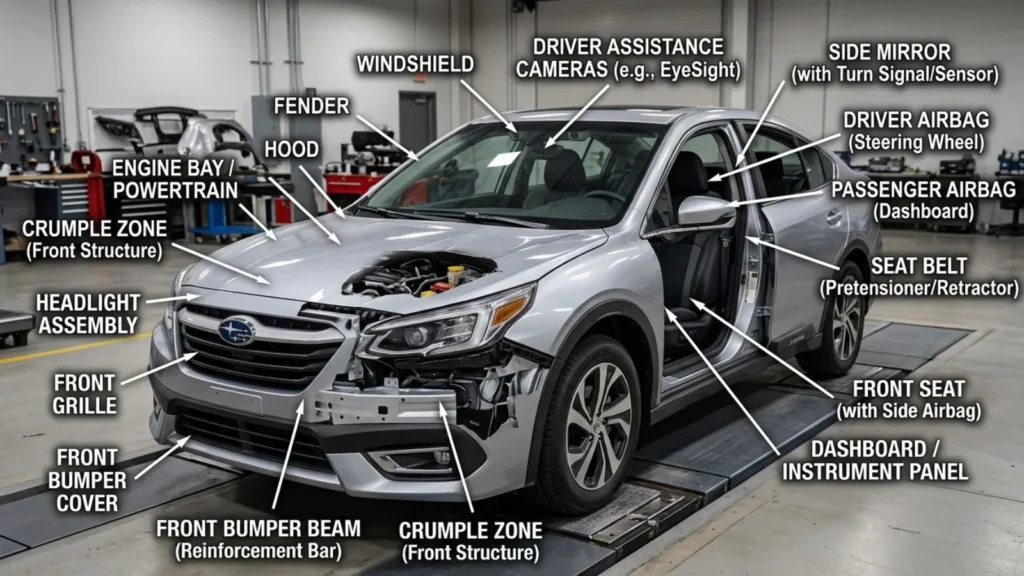
Modern cars are built with crash safety in mind. These front-end safety parts absorb energy and protect occupants in a collision.
1. Crumple Zone Meaning: A section of the front body engineered to deform and collapse in a controlled way during a crash absorbing impact energy before it reaches the cabin.
2. Bumper Reinforcement Bar Meaning: A strong metal or composite bar hidden behind the bumper cover that provides structural strength and absorbs energy during a collision.
3. Crash Box (Bumper Absorber) Meaning: A foam or plastic energy-absorbing block between the bumper bar and the body structure. It deforms on low-speed impacts to reduce repair costs.
4. Front Impact Sensor Meaning: A sensor usually mounted in the front bumper or frame that detects collision forces and triggers the airbags within milliseconds.
5. Hood Hinge Meaning: The pivot mechanism that allows the hood to open and close smoothly. Modern hinges are designed to buckle backward in a crash to protect pedestrians.
6. Radiator Support (Core Support) Meaning: The metal framework that holds the radiator headlights and grille in place. It is a key structural element of the front end.
7. Subframe (Front Cradle) Meaning: A structural frame beneath the engine bay that mounts the engine suspension and steering components to the body of the vehicle.
8. Tow Hook Meaning: A threaded metal hook at the front of the vehicle used to tow the car or secure it during transport. Often hidden behind a small bumper cover panel.
9. Underbody Shield (Belly Pan) Meaning: A plastic or metal panel beneath the front of the engine bay that protects mechanical components from road debris and reduces aerodynamic drag.
10. Pedestrian Airbag Sensor Meaning: Found in newer vehicles this sensor detects contact with a pedestrian and can trigger a hood airbag to reduce injury.
🪟 Front Glass & Wiper Parts Names
Visibility is everything. The front glass and wiper system are your windows to the road literally.
1. Windshield (Windscreen) Meaning: The large laminated glass panel at the front of the vehicle. It protects occupants from wind, rain and debris while providing a clear forward view.
2. Windshield Wiper Blade Meaning: A rubber blade attached to a metal arm that sweeps across the windshield to clear rain snow and dirt for a clear driving view.
3. Wiper Arm Meaning: The metal arm that connects the wiper motor to the wiper blade. It pivots back and forth driven by an electric motor.
4. Wiper Motor Meaning: The electric motor hidden beneath the cowl panel that drives the wiper arms. It usually has multiple speed settings and a park return function.
5. Washer Nozzle Meaning: A small spray jet at the base of the windshield or on the wiper arms that sprays washer fluid onto the windshield for cleaning.
6. A-Pillar (Windshield Pillar) Meaning: The vertical support columns on either side of the windshield that hold it in place and form part of the car’s roof structure.
7. Windshield Trim Molding Meaning: The rubber or plastic seal around the edges of the windshield that holds it in place and prevents water from leaking into the cabin.
8. Rearview Mirror Mount Meaning: The bracket at the top center of the windshield where the interior rearview mirror attaches. Some vehicles use an adhesive button on the glass.
9. Rain Sensor Meaning: A small optical sensor mounted behind the windshield near the mirror that detects rainfall and automatically activates the wipers.
10. Defrost Grid Tab Meaning: Found on some heated windshields these are the connection points for the electrical elements that warm the glass to clear frost and ice.
🔌 Front Sensors & Tech Parts Names
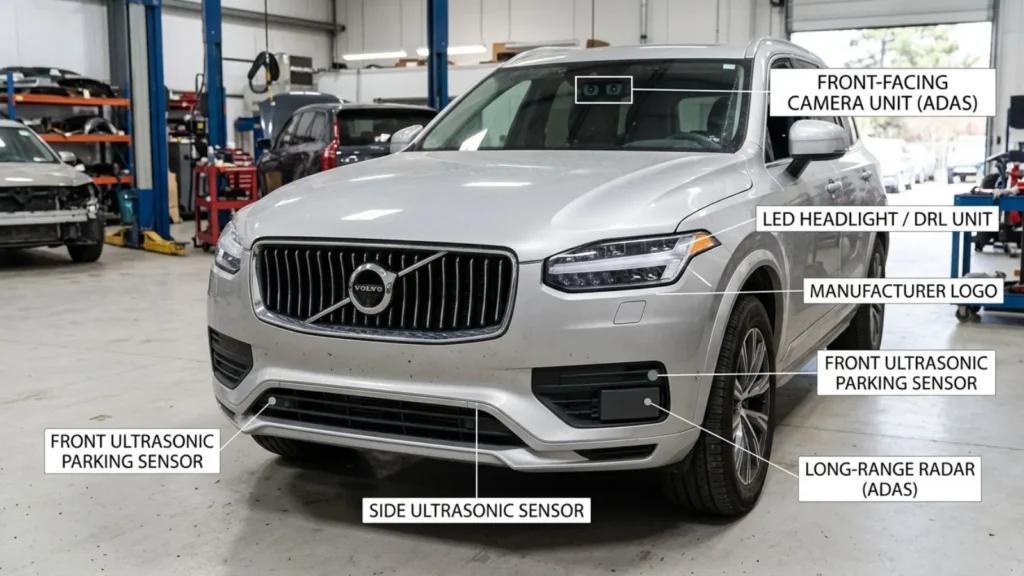
Today’s cars are packed with technology. The front end alone can house a dozen different sensors and cameras.
1. Front Camera (Forward-Facing Camera) Meaning: A small camera mounted in the windshield or grille area that feeds video to driver assist systems like lane keeping collision warning and parking assist.
2. Radar Sensor Meaning: A device usually mounted in the grille or behind the emblem that emits radar waves to detect the distance and speed of vehicles ahead. Used in adaptive cruise control.
3. LiDAR Sensor Meaning: A laser-based sensor found on some advanced vehicles that creates a 3D map of the surroundings for semi-autonomous and autonomous driving systems.
4. Ultrasonic Parking Sensor Meaning: Small round sensors embedded in the front bumper that emit sound waves to detect nearby obstacles and alert the driver with beeping tones.
5. Ambient Temperature Sensor Meaning: A small sensor usually mounted behind the front grille that measures the outside air temperature and displays it on the instrument cluster.
6. Impact Sensor (Accelerometer) Meaning: A motion-detecting sensor that measures sudden deceleration forces during a crash and sends a signal to deploy the airbags.
7. Adaptive Headlight Motor Meaning: A small electric motor inside some headlight housings that pivots the beam left or right as you steer, improving visibility around corners.
8. Night Vision Camera Meaning: A thermal imaging camera found on high-end vehicles that detects heat from pedestrians and animals ahead and displays them on the dashboard screen.
9. Tire Pressure Monitoring Sensor (TPMS) Meaning: A small sensor inside each wheel that measures air pressure and wirelessly transmits data to the dashboard to warn of under-inflation.
10. Heated Washer Nozzle Meaning: A washer nozzle with a built-in heating element that warms the washer fluid before spraying, preventing it from freezing on the windshield in cold weather.
🏎️ Performance Front End Parts Names
For car enthusiasts and performance drivers the front end can be upgraded for better speed handling and aerodynamics.
1. Front Splitter Meaning: A flat aerodynamic extension below the front bumper that generates downforce by creating a pressure difference between air above and below the car.
2. Canards (Dive Planes) Meaning: Small aerodynamic fins mounted on the sides of the front bumper that redirect airflow and generate additional downforce at the front axle.
3. Strut Tower Brace Meaning: A rigid metal bar connecting the two strut towers across the engine bay. It stiffens the front end improving handling and steering precision.
4. Big Brake Kit Meaning: An upgraded brake system with larger rotors and multi-piston calipers designed to provide stronger more consistent braking under high-performance conditions.
5. Adjustable Coilovers Meaning: A combined spring and damper unit that allows the driver to adjust ride height and damping stiffness for both street and track performance.
6. Performance Air Intake Meaning: A replacement for the stock airbox that draws in cooler less restricted air to improve engine breathing throttle response and power output.
7. Oil Cooler Meaning: A small radiator for engine oil usually mounted at the front near the main radiator. It keeps oil temperatures low during hard driving.
8. Front Lip Spoiler Meaning: A styled piece added to the lower front bumper to reduce air going under the car improving front-end stability at higher speeds.
9. Carbon Fiber Hood Meaning: A lightweight hood made from carbon fiber composite material reducing front-end weight and improving weight distribution for better handling.
10. Wide Body Front Fenders Meaning: Extended fender panels that push outward from the body to accommodate wider wheels and tires for better grip and a more aggressive stance.
🧰 Under-Car Front Parts Names
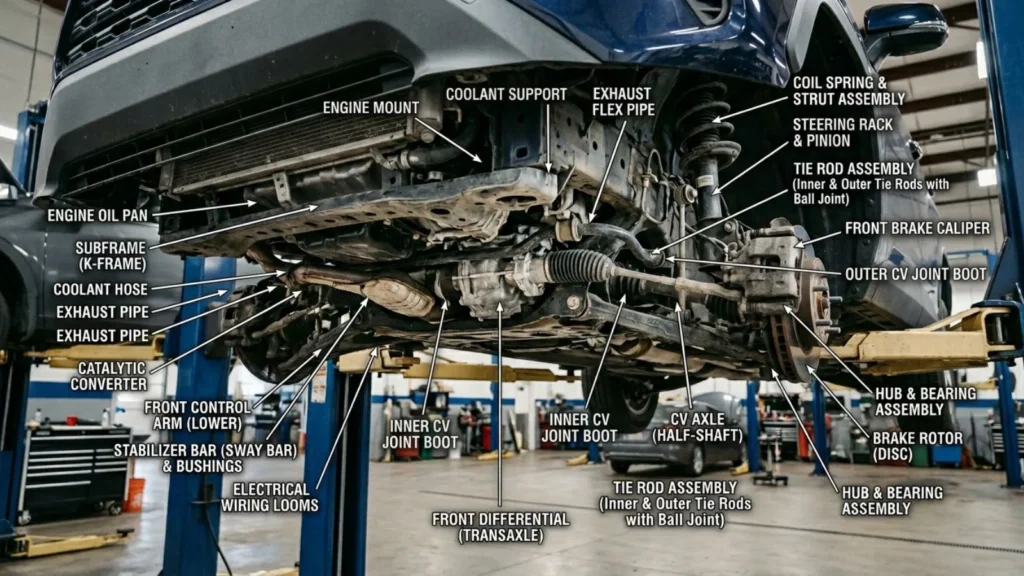
Beneath the front of the car lie more hidden but vital components that affect steering safety and drivetrain performance.
1. Front Axle Meaning: The shaft that transmits engine power from the differential to the front wheels. On front-wheel-drive cars both front axles are drive axles.
2. CV Joint (Constant Velocity Joint) Meaning: A flexible coupling in the axle shaft that allows the front wheels to steer and move with suspension travel while still transmitting power smoothly.
3. Steering Rack (Rack and Pinion) Meaning: The main steering mechanism that converts rotational input from the steering wheel into lateral movement that turns the front wheels left or right.
4. Tie Rod (Inner Tie Rod) Meaning: The inner link between the steering rack and the outer tie rod end. It transfers steering force from the rack to the front wheels.
5. Engine Mount (Front Mount) Meaning: A rubber and metal bracket that bolts the engine to the subframe or body. It supports the engine’s weight and absorbs vibration.
6. Transmission Mount Meaning: A rubber-cushioned bracket that secures the gearbox to the vehicle frame reducing vibration and keeping the drivetrain properly aligned.
7. Front Differential Meaning: Found on AWD and 4WD vehicles this gear assembly splits torque between the left and right front wheels allowing them to rotate at different speeds when cornering.
8. Steering Shaft (Intermediate Shaft) Meaning: The connecting shaft between the steering column inside the car and the steering rack below. It has universal joints to accommodate angles.
9. Power Steering Pump Meaning: A hydraulic pump usually driven by the engine belt that provides pressurized fluid to assist with turning the steering wheel with less effort.
10. Front Skid Plate Meaning: A thick metal or composite plate bolted under the front subframe or engine on off-road vehicles to protect vulnerable underbody components from rocks and terrain.
❓ Frequently Asked Questions (FAQs)
Q1: What are the main front end parts of a car?
A: The main front end parts include the hood front bumper grille headlights front fenders radiator control arms struts and steering rack. Together they make up the exterior suspension lighting and mechanical systems of the front of the vehicle.
Q2: What is the front panel of a car called?
A: The front panel is commonly called the front bumper cover or front fascia. Behind it sits the bumper reinforcement bar and crash absorber. The grille is the central opening panel in the middle.
Q3: What are front end parts made of?
A: It depends on the part. Body panels like bumpers and fenders are usually made of steel, aluminum or plastic. Suspension parts like control arms and struts are typically steel or aluminum. Lights use polycarbonate plastic lenses with LED or halogen bulbs inside.
Q4: How much does it cost to replace front end parts?
A: Costs vary widely. A new front bumper cover can range from $200 to $800 depending on the car. Headlights can run $100 to $500 each. Suspension parts like struts cost $150 to $400 per side including labor. Always get multiple quotes.
Q5: What causes front end parts to wear out?
A: Age mileage rough roads potholes accidents and exposure to weather all wear front end parts. Suspension components like ball joints and tie rod ends wear from constant movement. Rubber parts like bushings degrade from heat and road chemicals over time.
Q6: Can I replace front end parts myself?
A: Some parts like headlight bulbs, washer fluid reservoirs and air filters are easy DIY jobs. Others like struts, ball joints and steering racks require special tools, alignment equipment and mechanical experience. Always research your specific vehicle before attempting repairs.
Q7: What is a front-end alignment?
A: A front-end alignment is an adjustment of the front suspension angles, camber caster and toe to manufacturer specifications. It ensures the tires make proper contact with the road and the car drives straight without pulling to one side.
✅ Conclusion
There you have it, a complete tour of front end parts names from the very tip of the bumper to the deepest components hiding beneath the chassis.
If you’re dealing with lights, body panels, suspension brakes sensors or performance upgrades every single part has a name and a purpose.
Knowing these names gives you real power. I can’n call a mechanic and actually understand what they’re saying.
You can search for parts online with confidence. We can check your car yourself and catch problems early. You can even have a smarter conversation at the dealership.
Go back through the categories and pick out the parts that matter most to your situation whether you’re fixing a daily driver, restoring a classic or tuning a performance machine.
The more you know about your car the better you can care for it. Happy wrenching! 🔧